


Come visit us at NRF2023 Jacob K. Javits Convention Center | New York City

Read More

Top Smart Retail Solutions for Enhancing Customer Experience and Sales?

In today's retail landscape, businesses are increasingly turning to smart retail solutions to enhance customer experiences and boost sales. According to a report by McKinsey, the adoption of advanced technologies in retail can lead to a 30% increase in customer retention. Such statistics highlight the importance of delivering personalized experiences that meet the evolving demands of consumers.

Smart retail solutions leverage data analytics, artificial intelligence, and the Internet of Things to create seamless shopping experiences. Retailers who implement these technologies often see measurable improvements. For instance, a study by Deloitte indicates that a personalized shopping experience can elevate sales by up to 20%. However, adoption often faces challenges. Many businesses struggle to harness data effectively, failing to connect with customers on a meaningful level.

The integration of smart retail solutions is not without its hurdles. Retailers must overcome issues related to data privacy and system interoperability. These barriers can detract from the potential benefits of technology investments. As retailers explore smart solutions, they must reflect on these challenges. Balancing innovation with customer trust is crucial to reaping the full rewards of enhanced shopping experiences.
Top Smart Retail Solutions for Enhancing Customer Experience and Sales?

Overview of Smart Retail Solutions in the Current Market Landscape

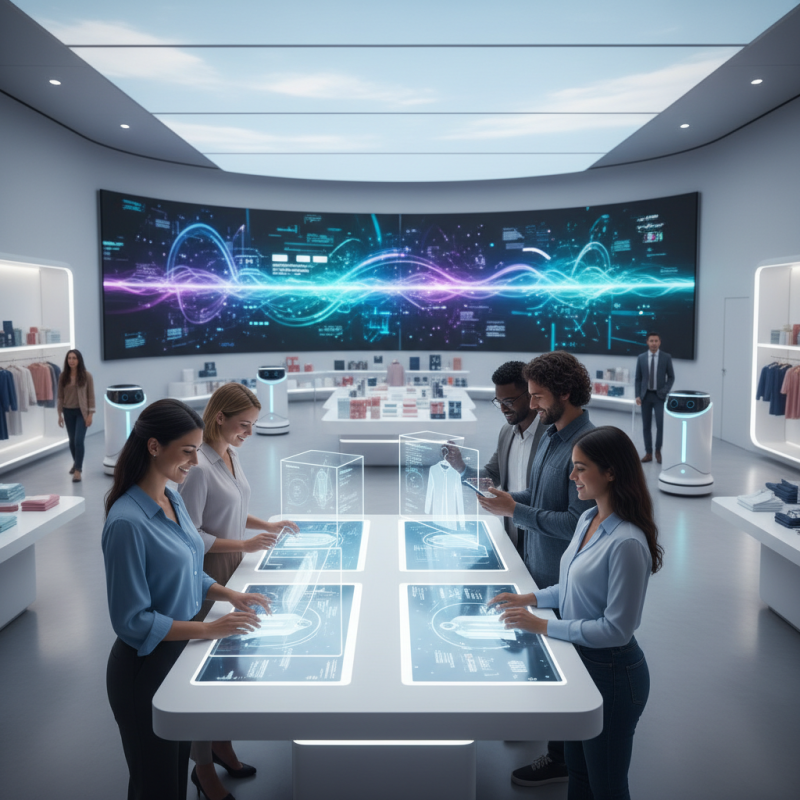
The current market landscape for smart retail solutions is rapidly evolving. These technologies aim to enhance customer experiences and boost sales. According to a recent market analysis, the smart retail market is projected to reach over $50 billion by 2025. This growth is driven by the increasing demand for personalized shopping experiences and the use of artificial intelligence in retail.

Smart retail solutions encompass various technologies, such as smart mirrors and interactive kiosks. These innovations allow customers to engage more deeply with products. For instance, smart mirrors can suggest outfits based on user preferences. They can significantly reduce the time customers spend deciding on purchases. However, the implementation of such technologies can be challenging. Many retailers need to invest heavily in staff training to maximize these advanced systems effectively.

Tips for integrating smart retail solutions include: Start with pilot programs to test customer responses. Observe how shoppers interact with new technology. Regularly collect feedback and make adjustments as needed. Additionally, ensure that your technology is user-friendly. Complicated interfaces can deter customers, leading to frustration rather than satisfaction. Remember, not every solution will fit your brand perfectly; adaptability is essential in this fast-changing landscape.
Top Smart Retail Solutions for Enhancing Customer Experience and Sales

Key Technologies Driving Customer Experience in Retail Environments

In today’s retail world, technology plays a key role in enhancing customer experience. Smart solutions are transforming stores into dynamic environments. Augmented reality (AR) is one such technology. Customers can virtually try products before purchasing. This reduces hesitation and boosts confidence.


Tips: Consider using AR for product demonstrations. It can create excitement. Highlight any unique features. Make every detail count.


Another essential technology is data analytics. Insights from customer behavior improve service. Retailers can understand preferences, track trends, and tailor offerings. Personalized promotions can increase engagement.


Tips: Gather customer feedback regularly. Adjust your strategies based on their responses. This builds loyalty and trust over time.


Lastly, implementing smart checkout systems minimizes wait times. Customers can pay quickly integrated apps. This convenience enhances satisfaction. However, some shoppers may still prefer human interaction. Balance technology with personal touch to enrich the experience.

The Role of Data Analytics in Personalizing Consumer Interactions

In today's retail landscape, data analytics plays a crucial role in enhancing customer interactions. Retailers leverage data to understand consumer behavior and preferences. By analyzing purchase patterns, businesses can create personalized shopping experiences. This helps in building loyalty and increasing sales.

Tips: Use customer data responsibly. Ensure privacy and compliance while collecting information. Transparency builds trust.

Retailers can segment customers based on various factors. This allows targeted marketing strategies. For instance, tailored promotions can resonate more with specific groups. However, it's essential to avoid over-segmentation. Doing so can lead to confusion and alienate potential customers.

Tips: Regularly review your data strategies. Are they still effective? Adapt to changing consumer needs.

Effective use of data can predict trends and behaviors. But relying solely on data may overlook the human aspect. Personal connections still matter in retail. Therefore, a balanced approach between analytics and personal engagement is necessary.

Case Studies: Successful Implementation of Smart Solutions in Retail

Smart solutions in retail are reshaping the shopping experience. Recent studies show that retailers implementing smart technologies see a 30% increase in customer engagement. For instance, a large supermarket chain adopted AI for personalized recommendations. This led to a 25% rise in average basket size within months.

Another case involved an apparel retailer using augmented reality (AR). By allowing customers to virtually try on clothes, the brand enhanced the shopping experience. This strategy resulted in a 40% drop in return rates. However, not every implementation is perfect. Some customers felt overwhelmed by too many options, leading to decision fatigue.

Moreover, data security concerns arise with smart solutions. Customers worry about how their information is used. Retailers must address these issues to build trust. They could provide clearer data policies and engage customers directly. Balancing innovation with customer comfort remains a challenge.

Top Smart Retail Solutions for Enhancing Customer Experience and Sales

Solution Type Implementation Case Customer Experience Improvement Sales Impact Technology Used
Mobile Payment Systems Increased transaction speed and reduced queues. Improved customer satisfaction scores by 20%. Increased sales by 15% in the first quarter post-implementation. NFC Technology, QR Code Payment
AI-Powered Personalization Customized product recommendations based on behavior. Increased engagement rates by 30% on digital platforms. Boosted online sales by 25%. Machine Learning Algorithms
IoT Inventory Management Real-time tracking of stock levels and automatic reordering. Minimized stockouts, improving customer trust and loyalty. Increased sales by 10% due to better stock availability. RFID Technology, Cloud Computing
Augmented Reality Shopping Virtual try-ons and enhanced product visualization. Increased visitor dwell time by 50%. Sales conversion rates improved by 40%. AR Technology, Mobile Applications
Chatbots for Customer Service 24/7 customer support and quick query resolution. Customer query resolution times reduced by 70%. Transaction increases of 5% from satisfied customers. Natural Language Processing, AI

Future Trends in Smart Retail: Innovations and Predictions for 2025

Top Smart Retail Solutions for Enhancing Customer Experience and Sales?

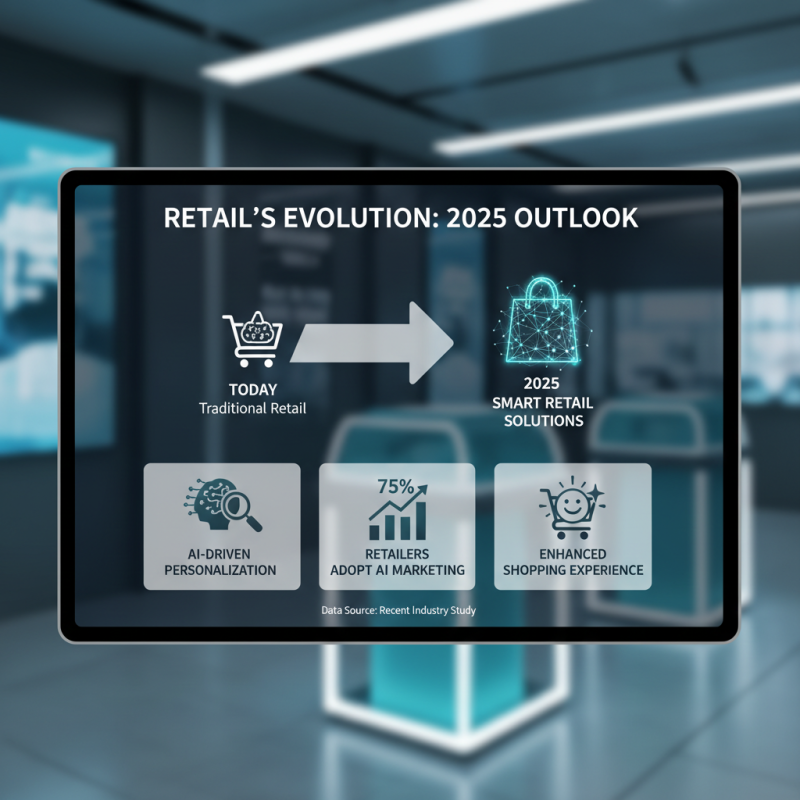
The retail landscape is rapidly evolving. By 2025, smart retail solutions will redefine customer engagement. A recent study predicts that 75% of retailers will use AI-driven tools for personalized marketing. This shift could enhance the shopping experience for many consumers.

Innovations like smart mirrors and virtual fitting rooms are gaining traction. A survey found that over 60% of consumers appreciate interactive technology. However, some shoppers still prefer traditional methods. Balancing innovation with familiar experiences remains a challenge for retailers.

Data analytics will play a crucial role. Retailers can gain insights into consumer behavior. Yet, many struggle with data integration. About 40% of businesses find it difficult to make sense of collected data. This gap may hinder the potential of smart retail solutions. Consumers expect seamless experiences, but are retailers ready?