




Come visit us at NRF2023 Jacob K. Javits Convention Center | New York City

Read More

Top 10 Innovative Retail Solutions Transforming the Shopping Experience

In today's rapidly evolving marketplace, the integration of technology and creativity in retail has led to the emergence of transformative shopping experiences. As consumer expectations shift towards convenience, personalization, and engagement, innovative retail solutions have taken center stage, redefining how businesses interact with their customers. The retail landscape is no longer just a venue for transactions, but a dynamic ecosystem where brands strive to captivate and retain their clientele through cutting-edge experiences.

This article delves into the top 10 innovative retail solutions that are reshaping the shopping experience. From augmented reality applications that allow customers to visualize products in their own homes to artificial intelligence tools that personalize recommendations, these solutions showcase how companies are leveraging technology to enhance customer satisfaction and drive loyalty. The future of retail is here, and it is marked by creativity and functionality, compelling brands to adapt and innovate to meet the demands of the tech-savvy consumer. Join us as we explore the advancements that are setting a new standard for retail engagement and efficiency.
Top 10 Innovative Retail Solutions Transforming the Shopping Experience

Innovative Technologies Enhancing Customer Engagement in Retail

In today’s fast-paced retail environment, customer engagement is paramount, and innovative technologies are spearheading this transformation. According to a recent report by Deloitte, 64% of consumers prefer brands that offer personalized experiences, making it clear that retailers must invest in tailored solutions to capture customer interest. Augmented reality (AR) and artificial intelligence (AI) are at the forefront of enhancing engagement, allowing shoppers to visualize products in their own environment or receive tailored recommendations based on their shopping habits.

One effective strategy is implementing interactive displays that leverage AR technology. These displays not only provide immersive experiences but also allow customers to manipulate virtual products before making a purchase decision. This aligns with findings from McKinsey, which indicate that businesses utilizing advanced technologies see a 20-50% increase in customer interaction rates.

**Tips:** Retailers should prioritize creating personalized shopping experiences by analyzing customer data to offer customized promotions. Additionally, integrating social media platforms can enhance visibility and engagement, as 70% of consumers reportedly look to social media for product inspiration, according to a HubSpot report. Embracing these innovative retail solutions can significantly uplift customer satisfaction and loyalty in the ever-evolving marketplace.
Personalized Shopping Experiences: AI and Data-Driven Solutions

Top 10 Innovative Retail Solutions Transforming the Shopping Experience

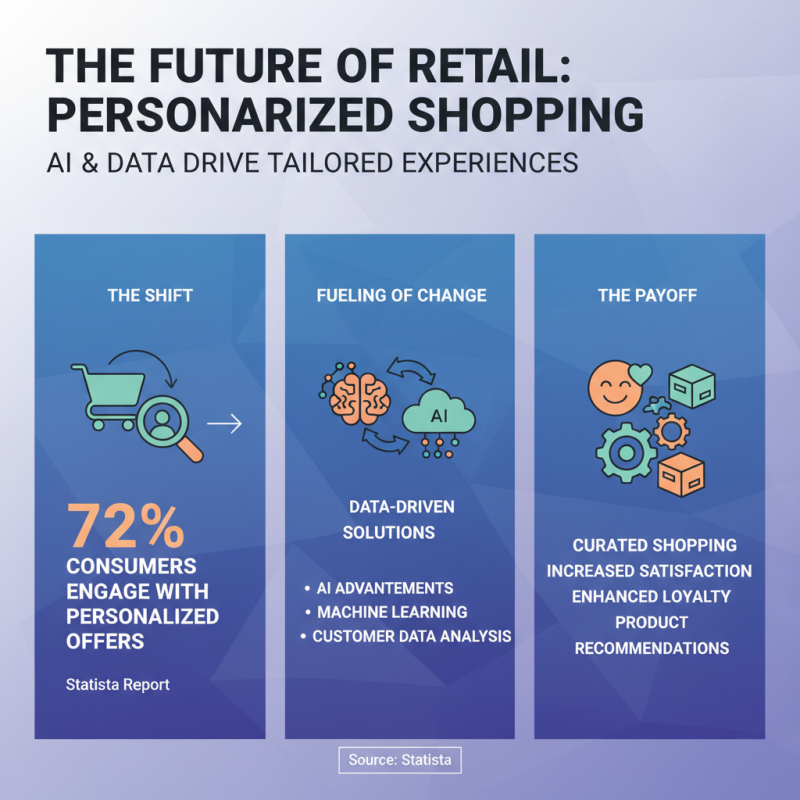
The retail landscape is undergoing a significant transformation, with personalized shopping experiences becoming a crucial focus. According to a report by Statista, 72% of consumers only engage with marketing messages that are customized to their interests. This shift toward personalization is largely fueled by advancements in AI and data-driven solutions, allowing retailers to tailor their offerings to individual customer preferences. Utilizing machine learning algorithms, retailers can analyze customer data to predict behaviors and recommend products, effectively creating a curated shopping experience that enhances both satisfaction and loyalty.

Furthermore, a study by Salesforce indicates that 70% of consumers say connected processes are very important to winning their business. This connectivity is achieved through data integration across multiple platforms, enabling retailers to understand the customer journey comprehensively. AI-driven chatbots and recommendation systems are instrumental in this process, providing real-time assistance and personalized product suggestions. As retailers harness these innovative technologies, they not only propel customer engagement but also foster a competitive edge in an increasingly crowded market. Such data-driven approaches not only improve the shopping experience but also lead to increased conversions and sales growth, highlighting the importance of personalization in modern retail strategies.

Seamless Omnichannel Strategies Improving Consumer Convenience

In today's retail landscape, seamless omnichannel strategies are pivotal in elevating consumer convenience, transforming traditional shopping into an integrated experience. According to a report by McKinsey, over 70% of consumers now use multiple channels throughout their shopping journey, highlighting the necessity for retailers to synchronize their online and offline operations. The effectiveness of an omnichannel approach is evidenced by a study from Harvard Business Review, which found that customers who engage with brands across multiple channels tend to spend 10% more in-store and 20% more online compared to single-channel shoppers.

Innovations such as mobile apps, augmented reality (AR), and click-and-collect services are at the forefront of this transformation. Retailers leveraging these technologies provide a more personalized shopping experience, catering to the consumer's preferences and behaviors. For instance, according to a report by Shopify, businesses that implemented AR saw a 94% increase in conversion rates, indicating that such innovations not only enhance customer engagement but also significantly boost sales. Embracing an omnichannel strategy not only streamlines the shopping process but solidifies brand loyalty, ensuring that consumers return for more convenient and engaging experiences.

Automation and Robotics Revolutionizing Inventory Management

In the rapidly evolving retail landscape, automation and robotics are at the forefront of transforming inventory management, significantly enhancing the shopping experience for consumers. By leveraging advanced robotic systems, retailers can streamline the labor-intensive processes of stocking, organizing, and tracking inventory. These automated systems not only minimize human error but also optimize space utilization within stores, leading to improved product accessibility and faster restock times. This efficiency allows staff to focus on more strategic tasks, such as personalized customer service, thereby enriching the overall shopping experience.

Furthermore, the integration of robotics in inventory management facilitates real-time data analysis, enabling retailers to make informed decisions regarding stock levels and product placement. For example, intelligent robots equipped with sensors can provide insights into inventory turnover rates and consumer preferences, allowing retailers to adapt their offerings based on actual demand. This data-driven approach not only improves inventory accuracy but also enhances customer satisfaction by ensuring that popular items are always available. Ultimately, automation and robotics are not just about efficiency; they represent a fundamental shift in how retailers engage with their inventory and, by extension, their customers.

Sustainable Practices in Retail: Innovations for a Greener Future

The retail industry is undergoing a significant transformation aimed at sustainability, with innovative practices paving the way for a greener future. One of the most exciting developments is the implementation of circular economy principles, where retailers are rethinking the life cycle of products. By designing items that are easier to recycle, refurbish, or resell, companies can significantly reduce waste and minimize their carbon footprints. Retailers are also emphasizing the use of sustainable materials in their products, which not only appeals to eco-conscious consumers but also fosters a culture of environmental responsibility.

Moreover, technology plays a crucial role in promoting sustainable practices within the retail sector. Retailers are now leveraging AI and data analytics to optimize supply chain management, reducing excess inventory and ensuring more efficient use of resources. Furthermore, innovative delivery methods such as electric vehicles and drones are emerging, lowering emissions associated with transportation. As retailers embrace these sustainable innovations, they not only enhance their operational efficiency but also create a more positive shopping experience for consumers who are increasingly prioritizing eco-friendly choices.

Top 10 Innovative Retail Solutions Transforming the Shopping Experience - Sustainable Practices in Retail: Innovations for a Greener Future

Innovation Description Sustainability Impact Implementation Year
Smart Shelving Interactive shelves that track inventory levels and customer interactions. Reduces waste by optimizing stock levels. 2021
Eco-friendly Packaging Biodegradable and recyclable packaging materials. Minimizes plastic waste and promotes recycling. 2019
Virtual Fitting Rooms Augmented reality technology for trying clothes virtually. Reduces returns and associated waste. 2020
AI-Powered Customer Insights Using AI to analyze shopping behaviors and preferences. Enhances inventory planning and decreases overproduction. 2022
Digital Wallets and Contactless Payments Facilitating faster and safer transaction methods. Decreases paper waste from receipts. 2021
Sustainable Supply Chains Integrating sustainability in sourcing and distribution. Lowers carbon footprint of product transportation. 2020
In-store Recycling Stations Providing customers a way to recycle used products. Encourages responsible disposal of waste. 2021
Blockchain for Transparency Using blockchain to track product origins and sustainability credentials. Enhances consumer trust in sustainable practices. 2022
Loyalty Programs for Sustainable Choices Rewarding customers for choosing eco-friendly products. Promotes sales of sustainable alternatives. 2023
Personalized Sustainability Reports Providing customers reports on their shopping impact. Raises awareness and encourages eco-friendly choices. 2023