


Come visit us at NRF2023 Jacob K. Javits Convention Center | New York City

Read More

Why Businesses Choose Custom Retail Solutions for Their Unique Needs?

In today's competitive market, businesses require tailored solutions to thrive. Custom retail solutions emerge as a key strategy to meet specific needs. These solutions optimize operations and enhance customer satisfaction.

Many retailers struggle with one-size-fits-all approaches. They often fail to address unique challenges, leading to frustration and lost opportunities. Custom retail solutions allow businesses to design workflows, inventory systems, and marketing strategies that resonate with their target audience. When operations align with customer expectations, sales tend to increase.

However, developing custom retail solutions is not without challenges. Businesses must invest time and resources into understanding their needs and testing different approaches. This iterative process can reveal valuable insights. Yet, some may still hesitate, fearing the uncertainty of change. Embracing custom solutions can require a mindful shift, but the potential rewards are clear.

Why Businesses Choose Custom Retail Solutions for Their Unique Needs?

Factors Driving Businesses Toward Custom Retail Solutions

In the evolving landscape of retail, businesses often face unique challenges. Off-the-shelf solutions may not address specific needs. This has prompted many companies to explore custom retail solutions. Tailored approaches can streamline operations and enhance customer experiences. These solutions offer flexibility, allowing firms to adapt to market changes.

One significant factor driving this trend is the desire for personalization. Businesses aim to create unique shopping experiences that resonate with their target audience. Custom solutions can facilitate this by integrating advanced technologies. For example, personalized marketing can be achieved through data-driven insights. However, some companies may struggle with implementation. They risk over-complicating processes and losing focus on their core objectives.

Another factor is the potential for innovation. Custom solutions encourage creativity in product offerings and service delivery. Firms can experiment with new ideas that align with their brand values. Yet, this pursuit of innovation is not without its challenges. Businesses might face budget constraints or resistance to change. Balancing innovation with practicality demands careful consideration.

Why Businesses Choose Custom Retail Solutions for Their Unique Needs?

Factor Description Percentage of Businesses
Customization Ability to tailor solutions to specific business needs 45%
Scalability Easily adjustable as the business grows 38%
Integration Seamless integration with existing systems 50%
Cost-effectiveness Long-term savings through optimized processes 32%
Customer Experience Enhanced shopping experience for customers 54%

Benefits of Tailoring Retail Solutions to Business Models

In today's competitive market, businesses often face unique challenges. Custom retail solutions provide the flexibility to address these specific needs. Tailoring solutions can enhance efficiency, improve customer satisfaction, and ultimately boost sales. Each business model has distinct characteristics. Custom solutions allow organizations to align technology with their operational processes.

Customizing retail solutions can foster innovation. It encourages businesses to think outside the box. However, it can also lead to over-complication. Simplicity should not be overlooked. Every adjustment requires careful consideration. Businesses must ensure they do not stray from their core mission while implementing these changes.

Tips: Focus on essential features that align with your goals. Monitor the effects of each change. Sometimes, less is more. Analyze customer feedback to refine your approach. Avoid the temptation to adopt every trend. Tailoring solutions should resonate with your audience's needs. Remember, the perfect solution is often an ongoing process, not a fixed point.

Challenges Faced by Businesses with Standard Retail Solutions

Why Businesses Choose Custom Retail Solutions for Their Unique Needs?

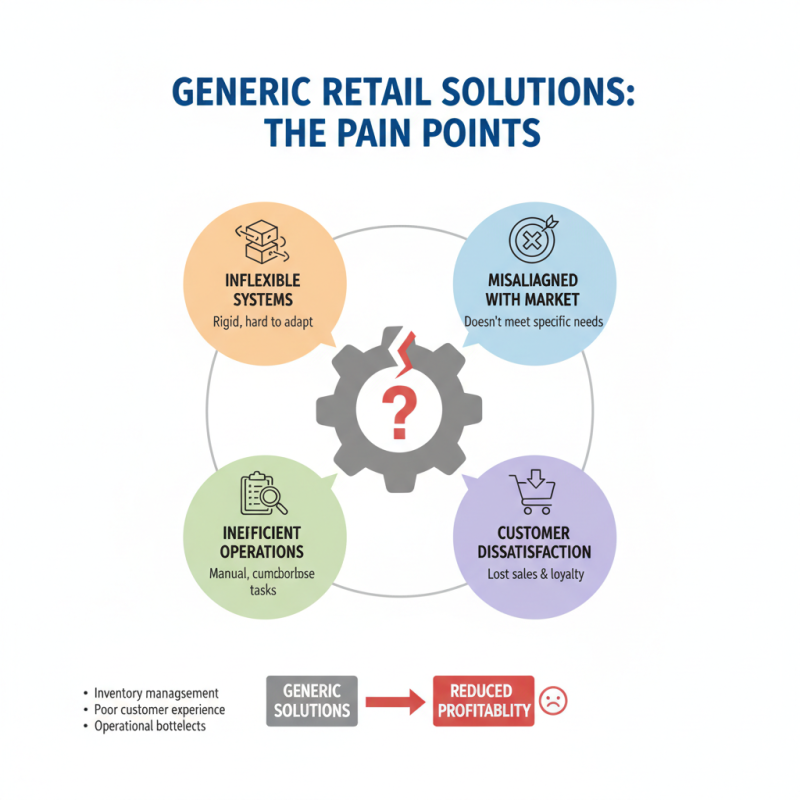
Many businesses struggle with standard retail solutions. These systems often lack flexibility. They may not cater to specific market needs. As a result, inefficiencies can arise. For instance, inventory management becomes cumbersome. Misalignment with customer expectations can occur. A retail solution that’s not tailored can lead to dissatisfaction. This might impact sales negatively.

Moreover, standard solutions may not integrate well with existing processes. Data silos can form easily. Employees spend too much time navigating these barriers. This lost productivity can affect overall morale. Companies might find themselves juggling outdated technology. This puts them at a competitive disadvantage. Resource allocation suffers as a result.

Customization can help address these issues. A tailored solution serves unique challenges. It bridges gaps left by standard options. However, not every business can foresee the potential hiccups. Budget constraints can hinder the pursuit of perfect solutions. Continuous assessment is necessary to adapt and improve. Businesses need to embrace this journey. Otherwise, they may continue facing the same obstacles.

Examples of Successful Custom Retail Solutions in Various Industries

Why Businesses Choose Custom Retail Solutions for Their Unique Needs?

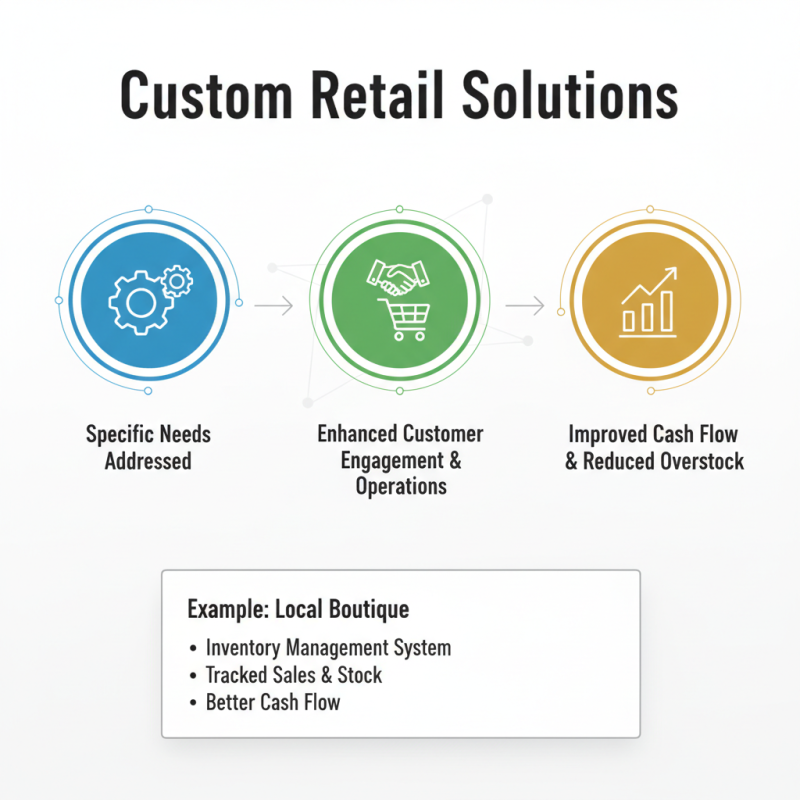
In today's retail landscape, businesses seek custom solutions to address specific needs. These tailored approaches enhance customer engagement and streamline operations. For example, a local boutique implemented an inventory management system. It helped them track sales and manage stock. This reduced overstock issues and improved cash flow.

Another compelling case is in the food industry. A small café developed an order-ahead app. Customers can place orders before arriving. This not only cut long wait times but also boosted daily sales. However, the café encountered setbacks, like system glitches. It emphasized the importance of regular updates and customer feedback.

In the fitness sector, gyms have turned to personalized training apps. Members receive tailored workout plans and nutrition advice. These platforms foster community through challenges and leaderboards. Yet, some users reported feeling overwhelmed by the app’s complexity. This highlights a need for simplicity in design to enhance user experience.

Future Trends in Custom Retail Solutions for Business Adaptability

The retail landscape is changing rapidly. Businesses recognize the need for custom retail solutions. According to a recent study by Industry Insights, 73% of retailers are adapting their operations to meet unique customer needs. Flexibility is crucial. It allows businesses to pivot quickly in response to market demands.

Future trends highlight the importance of data analytics. Retailers are harnessing customer data to tailor their offerings. A report from Market Research Future indicates that 65% of businesses believe data-driven decisions enhance customer satisfaction. However, not all strategies succeed. Some companies overlook the significance of understanding their target audience deeply. They often invest in technology without a clear plan, leading to inefficiencies.

Innovation is key. Smart retailers embrace automation and AI to streamline processes. The Custom Retail Solutions Report revealed that 58% of companies using these technologies reported increased revenue. Yet, the challenge lies in execution. Many struggle with integrating new systems into their existing infrastructure. Adaptability requires ongoing assessment and refinement of strategies. Retailers must remain vigilant and open to change.

Why Businesses Choose Custom Retail Solutions for Their Unique Needs

This chart illustrates the key factors influencing businesses to adopt custom retail solutions. The data reflects the growing trends in customization, showcasing the importance of flexibility, improved customer experience, and operational efficiency.