



Come visit us at NRF2023 Jacob K. Javits Convention Center | New York City

Read More

What are the Best Smart Retail Solutions for Global Buyers

In the rapidly evolving retail landscape, smart retail solutions have become essential for global buyers. Renowned expert Dr. Emily Chen, a leading voice in retail technology, stated, "Adopting smart retail solutions is not just about innovation; it's about survival in today’s market." This insight highlights the urgency for businesses to adapt.

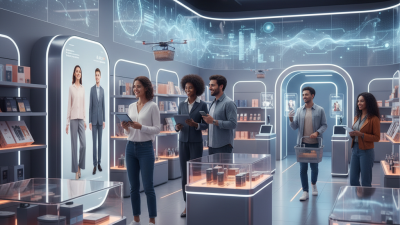
As consumers increasingly seek personalized experiences, retailers must leverage data-driven insights and automation. Smart retail solutions enable businesses to analyze consumer behavior and tailor their offerings. Imagine a store where digital shelves can change based on real-time demand, enhancing the shopping experience.

However, the transition to smart retail is not without challenges. Many businesses struggle to integrate new technologies effectively. Some retailers may invest heavily in systems that don’t align with their goals, leading to wasted resources. It’s a journey that requires not just technology but a clear vision and strategy. Global buyers must reflect on these aspects as they explore the best smart retail solutions available.

What are the Best Smart Retail Solutions for Global Buyers

Top Smart Retail Technologies Reshaping Global Buying Experiences

Smart retail technologies are transforming the global buying landscape. These advancements enhance customer experiences and streamline operations. From AI-driven recommendations to augmented reality fitting rooms, smart solutions are everywhere. Retailers are adapting to meet the changing needs of consumers, making the shopping journey more intuitive and engaging.

To maximize success in smart retail, focus on personalization. Use data analytics to understand your customers' preferences. Tailoring recommendations can significantly boost customer satisfaction. Additionally, consider incorporating interactive technologies. Virtual reality can offer immersive experiences, allowing customers to engage with products before purchasing.

However, with rapid technological change comes the challenge of implementation. Not all solutions are a perfect fit for every business. Retailers must evaluate their unique needs and capabilities. It’s vital to avoid rushing into new technology without assessing its impact on customer experience. Reflect on past initiatives that haven’t worked and learn from them. Keep an open mind; improvement is a continuous journey in the ever-evolving world of retail.

What are the Best Smart Retail Solutions for Global Buyers

Technology Description Benefits Implementation Examples
AI-Driven Analytics Utilizes artificial intelligence to analyze consumer behavior and preferences. Improved inventory management, personalized shopping experiences. Retail chain using data analytics to tailor marketing strategies.
Augmented Reality (AR) Enhances the shopping experience by overlaying digital information on the physical world. Interactive shopping experiences, reduced return rates. Home improvement store allowing customers to visualize products in their space.
Contactless Payments Facilitates payment transactions without physical contact. Faster checkouts, enhanced customer safety. Supermarkets allowing NFC-enabled smartphone payments.
Smart Shelves Equipped with sensors to monitor inventory levels in real-time. Reduced stockouts, optimized supply chain management. Electronics retailers using smart shelving for real-time inventory updates.
Virtual Assistants AI-based customer service tools to assist shoppers online or in-store. 24/7 support, personalized recommendations. Fashion retailers using chatbots to guide customers through purchases.

Key Features of Effective Smart Retail Solutions for Buyers

In the rapidly evolving world of retail, buyers seek smart solutions that enhance their experience. Effective smart retail solutions prioritize user-friendly interfaces and real-time data analytics. These technologies empower buyers to make informed decisions. Integrating augmented reality can enrich the shopping experience. Buyers should be able to visualize products in their space before purchasing. This immersive feature can bridge the gap between online and offline shopping.

Security is another essential aspect. Buyers must trust that their data is protected. Solutions offering robust encryption and transparent data policies gain credibility. Real-time inventory tracking systems ensure that buyers have access to accurate stock information. This reduces the frustration of ordering products that are unavailable. Responsive customer support can enhance the overall experience, providing assistance when needed.

While innovations are promising, they also come with challenges. Not all buyers may adapt quickly to new technologies. Companies must consider varied user demographics when designing their platforms. It’s crucial to gather feedback regularly, identifying areas that may require improvement. This iterative process can lead to refined solutions that better meet the needs of all buyers. Balancing innovation with accessibility will define the future of retail solutions.

Comparative Analysis of Leading Smart Retail Platforms

In the fast-evolving retail landscape, smart retail solutions are crucial for enhancing customer experiences and operational efficiency. A recent report indicates that the global smart retail market is expected to reach $100 billion by 2025, growing at a compound annual growth rate (CAGR) of 28.4%. This rapid growth highlights the urgency for retailers to adopt innovative platforms that leverage data analytics, artificial intelligence, and IoT technologies.

Leading platforms in smart retail focus on customization and automation. For instance, they provide advanced customer analytics that help in personalizing shopping experiences. Reports show that retailers using AI to analyze customer purchasing patterns can increase sales by up to 30%. However, the implementation of such technologies is not without challenges. Security concerns and the integration of legacy systems often hinder retailers' progress. Many businesses struggle to balance technology adoption with customer trust, raising questions about data privacy.

Another significant aspect is the adaptability of these platforms. As consumer preferences shift rapidly, the ability to pivot strategies is vital. The industry has seen that 40% of retailers using agile methodologies report improved responsiveness to market changes. Still, the disparity in technology adoption between large and small retailers raises concerns. Many smaller players lack the resources to compete, potentially limiting their market growth and innovation. The challenges of creating a truly inclusive smart retail ecosystem demand reflection and strategic planning.

Benefits of Smart Retail Solutions for Global Supply Chains

Smart retail solutions are transforming global supply chains. They offer enhanced visibility and efficiency, addressing the unique challenges of international trade. These systems leverage IoT, AI, and data analytics to streamline inventory management. This leads to better demand forecasting, reducing excess stock and minimizing wastage.

One significant benefit is the real-time tracking of goods. Businesses can monitor shipments, ensuring timely deliveries. This reliability builds trust with buyers, enhancing customer satisfaction. However, integrating these solutions can be complex. Organizations must invest in training. Staff may resist changes, impacting productivity initially.

Effective collaboration is crucial. Sharing information across the supply chain enhances decision-making. When suppliers and retailers communicate transparently, they can respond swiftly to market changes. Yet, it’s important to assess the risks of data privacy constantly. Keeping information secure should remain a top priority.

Consider starting small. Implement one solution at a time. This allows for adjustments based on feedback. Collect data and analyze it closely. Use those insights to drive future strategies. Balancing innovation with practicality will pave the way for sustainable growth.

Emerging Trends in Smart Retail for Global Market Expansion

Smart retail is evolving rapidly. Emerging technologies are reshaping the shopping experience, especially for global buyers. According to a report by McKinsey, up to 70% of consumers have shifted to digital shopping. This highlights a trend that cannot be ignored. Retailers must innovate to keep up.

Data analytics plays a crucial role in understanding customer behavior. Retailers are using AI to analyze purchasing patterns. This helps in personalizing marketing efforts, resulting in a 20% increase in conversion rates, as noted by Gartner. However, many retailers still struggle with data integration. This gap can hinder their ability to fully leverage these insights.

Another trend is the rise of omnichannel strategies. A study from Shopify revealed that retailers with robust omnichannel strategies see 30% higher customer retention. Yet, not all global buyers can navigate multiple platforms easily. Simplifying user experiences must be a priority. Smart solutions must address these challenges to succeed in diverse markets.